 The District by Navilu
Miyawaki forests in a residential layout
What a pocket forest is, what it does well, and what to ask before you count on one.
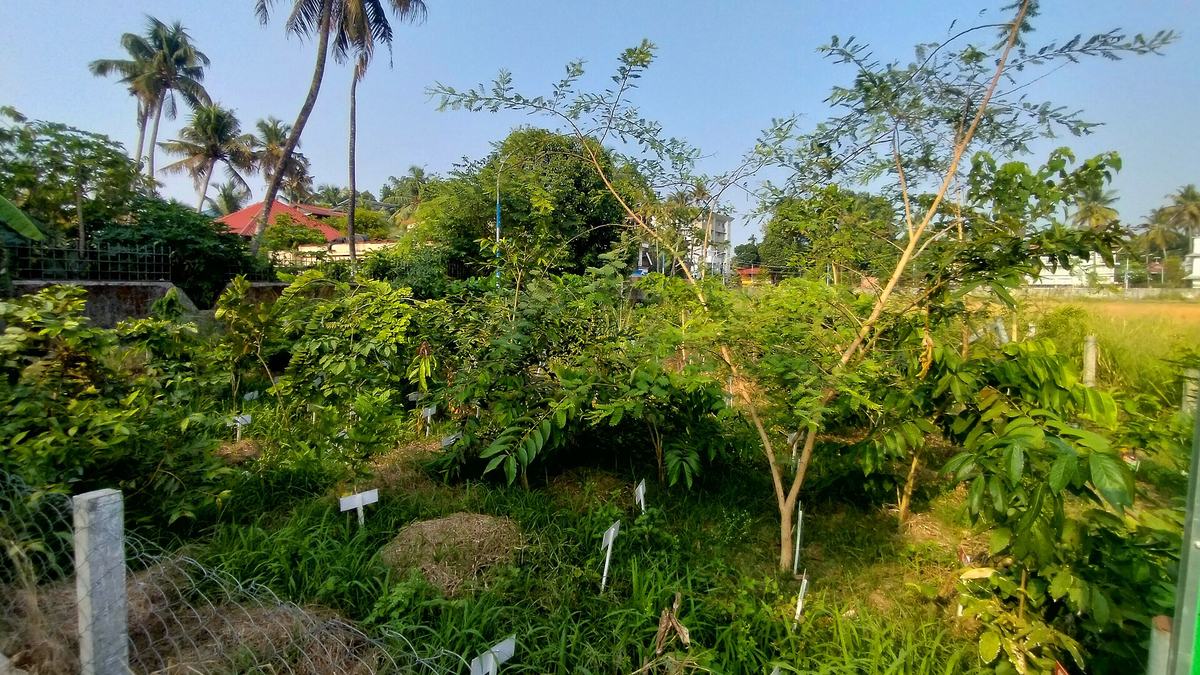
A Miyawaki forest is a small, dense plantation of native trees and shrubs, named after the Japanese botanist Akira Miyawaki. The soil is loosened and enriched first. Saplings then go in at about three to five per square metre, far closer than in a garden, so they compete for light and grow upward.
The small footprint is why the idea suits housing. One common format fits about 600 trees into 200 sq m, roughly the size of a tennis court. In a layout, a corner of a park can become a shaded, walk-through thicket that screens the road and brings birds back, where a lawn would do neither.
The first two to three years decide the result. The saplings need watering, weeding and mulching in that period, and a plantation left alone too early does poorly. In Chennai, a spot check of civic pocket forests found some with litter and no watering a few years after planting.
The evidence is thinner than the marketing. A 2026 review in the Journal of Applied Ecology examined 51 publications on the method and found that fewer than half gave any measurements. The claim of much faster growth was partly supported; several other claims had little data behind them. Ecologists in Bengaluru add that the city's natural vegetation is dry deciduous forest and scrub, so the choice of species matters more than the density.
A Miyawaki forest is being created as part of the park amenities at The District. When you visit, ask the sales team three things: which native species, who waters it for the first three years, and who maintains it after handover.
Miyawaki forest at Edappally, Ernakulam. Photo: Vijayanrajapuram, Wikimedia Commons, CC BY-SA 4.0. Cropped.